CASE STUDY
Simplifying key version control workflows to increase user adoption
Unity Version Control System is a versioning software for games. It's like Github but suited better for large scale games as it can hold huge amount of storage.
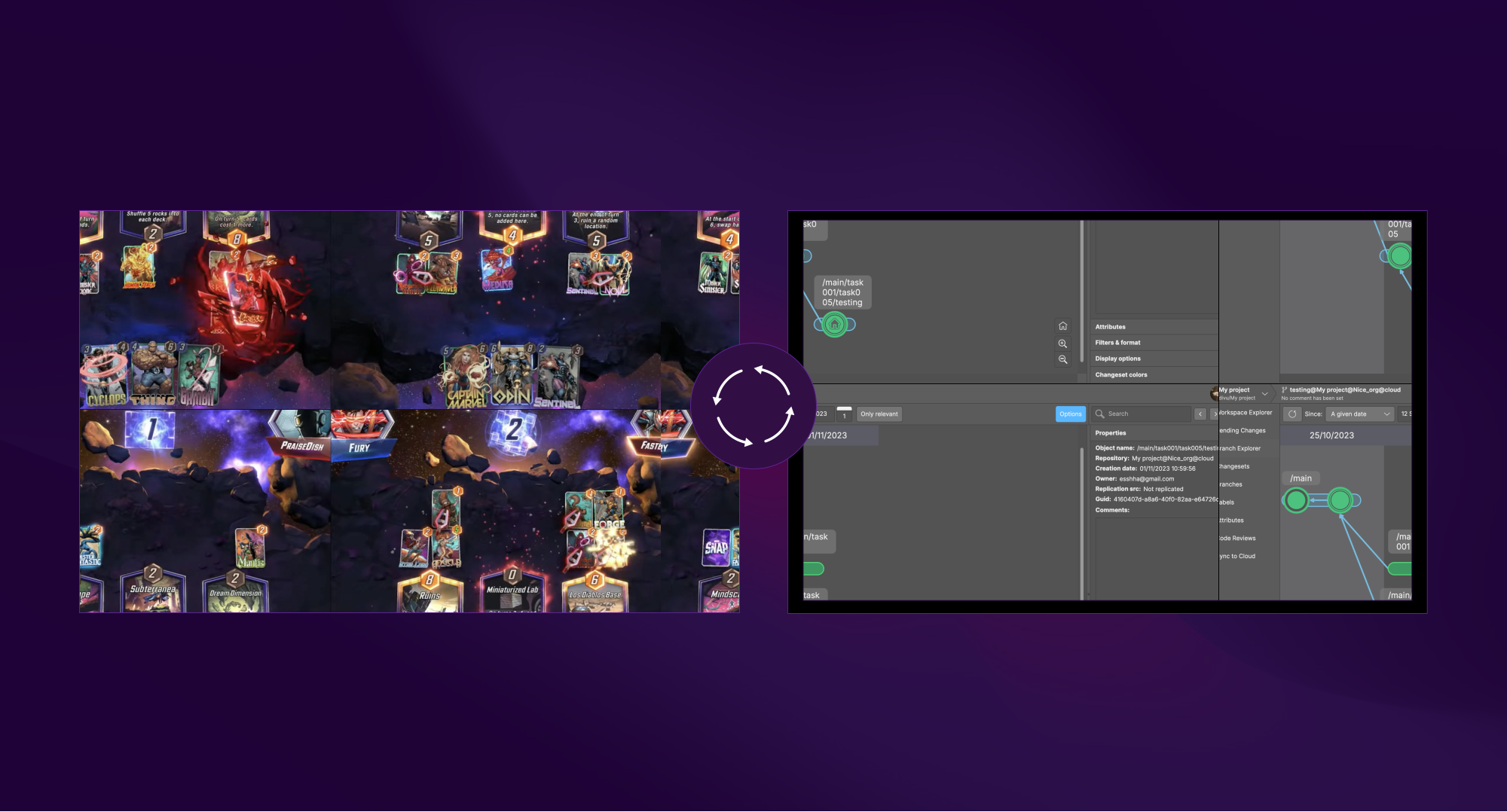
A representation of syncing action between game development and version control process
Role Senior product designer
Goal Driving adoption
Impact 22% adoption to new updates
The problem
By 2020, Unity had acquired Plastic SCM to bring version control into its game development ecosystem. It served 60k monthly active users, from AAA studios to indie teams shipping games every day. It had a loyal base of technical artists, engineers, and producers who depended on it every day to ship games.
But years of saying yes to every customer request had buried the product under layers of complexity. Core workflows were disconnected. There was no way to update the software from inside the tool. Novice users opened it, got lost, and quietly left.
For Unity, fixing this became a priority. Plastic SCM needed to feel like part of Unity before it could fit alongside the rest of the toolset.
User Research
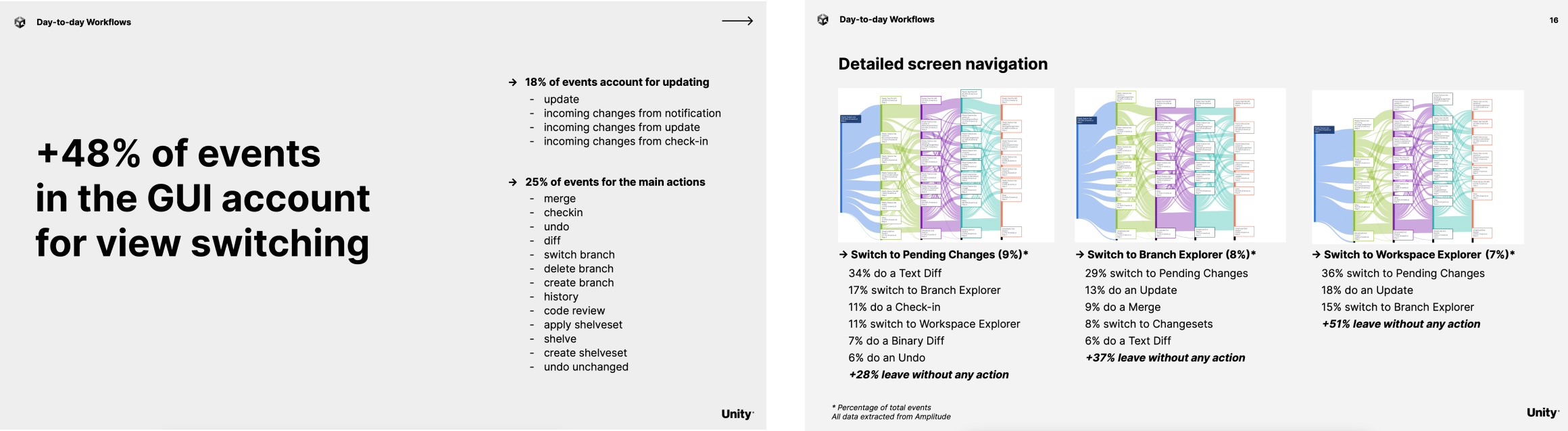
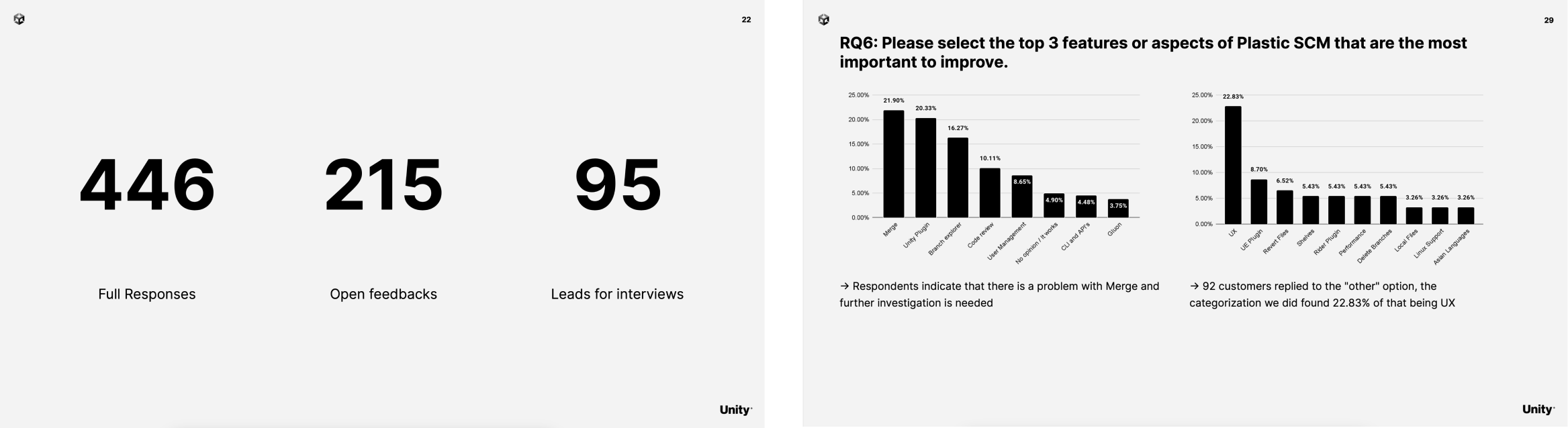
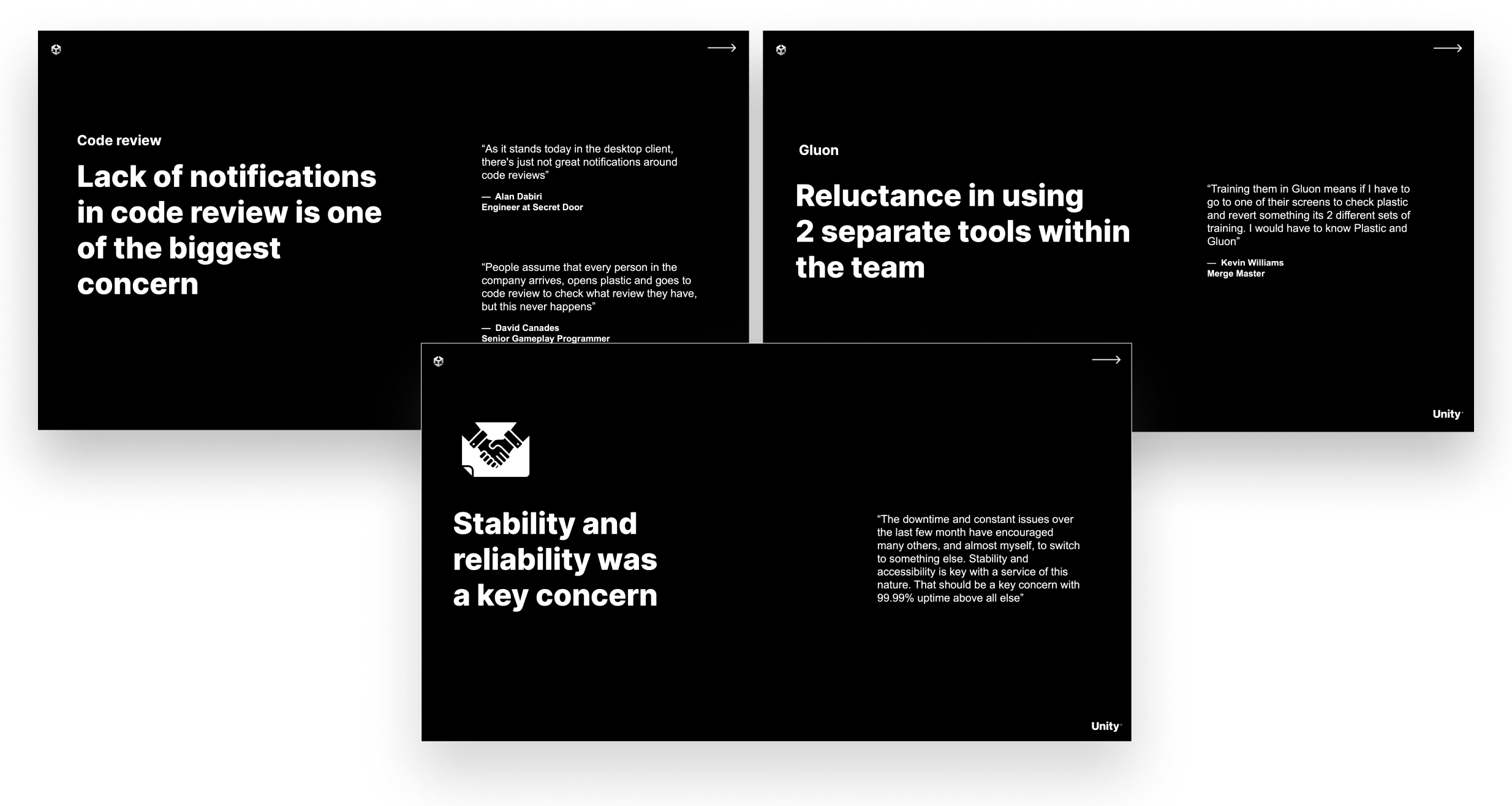
This marked our initial comprehensive design exploration for the product, requiring a thorough investigation. We delved into usage data and analyzed feedback from the annual customer satisfaction survey. Following this, we conducted user interviews to obtain direct insights regarding the behaviors highlighted by the data.
Gathering insights from usage data
Analysing customer satisfaction survey results
Presenting findings at DevOps townhall
The findings from all these studies were compiled and presented to three engineering teams, including the core team, as well as at the executive level townhall.
Plan of action
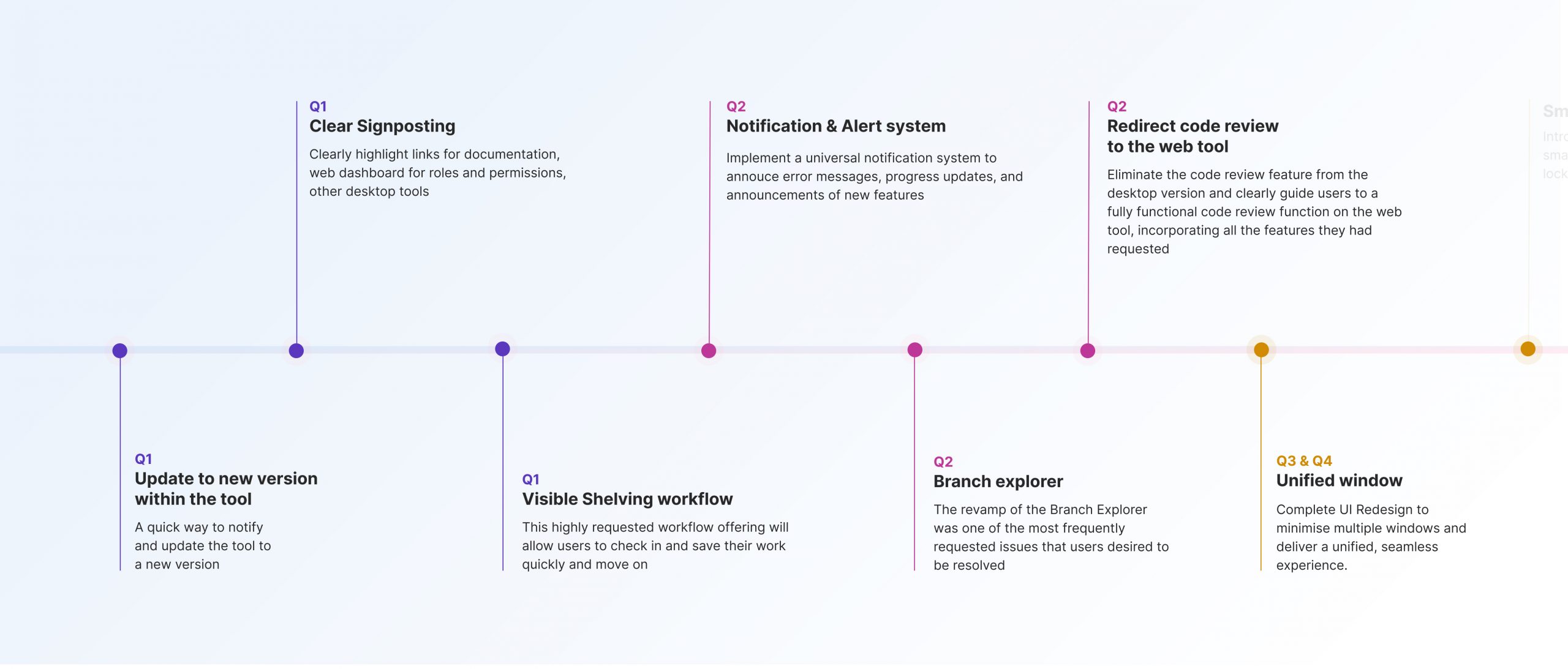
The overwhelming feedback from user interviews distinctly pinpointed the major problem areas that required prompt attention. We shaped these problem areas into a cohesive roadmap, structured by priority and workflows. Subsequently, the roadmap was segmented into initiatives slated for each quarter.
Setting up a outcome-driven road map for 2023 - 2024
Key design changes
New updates, finally seen
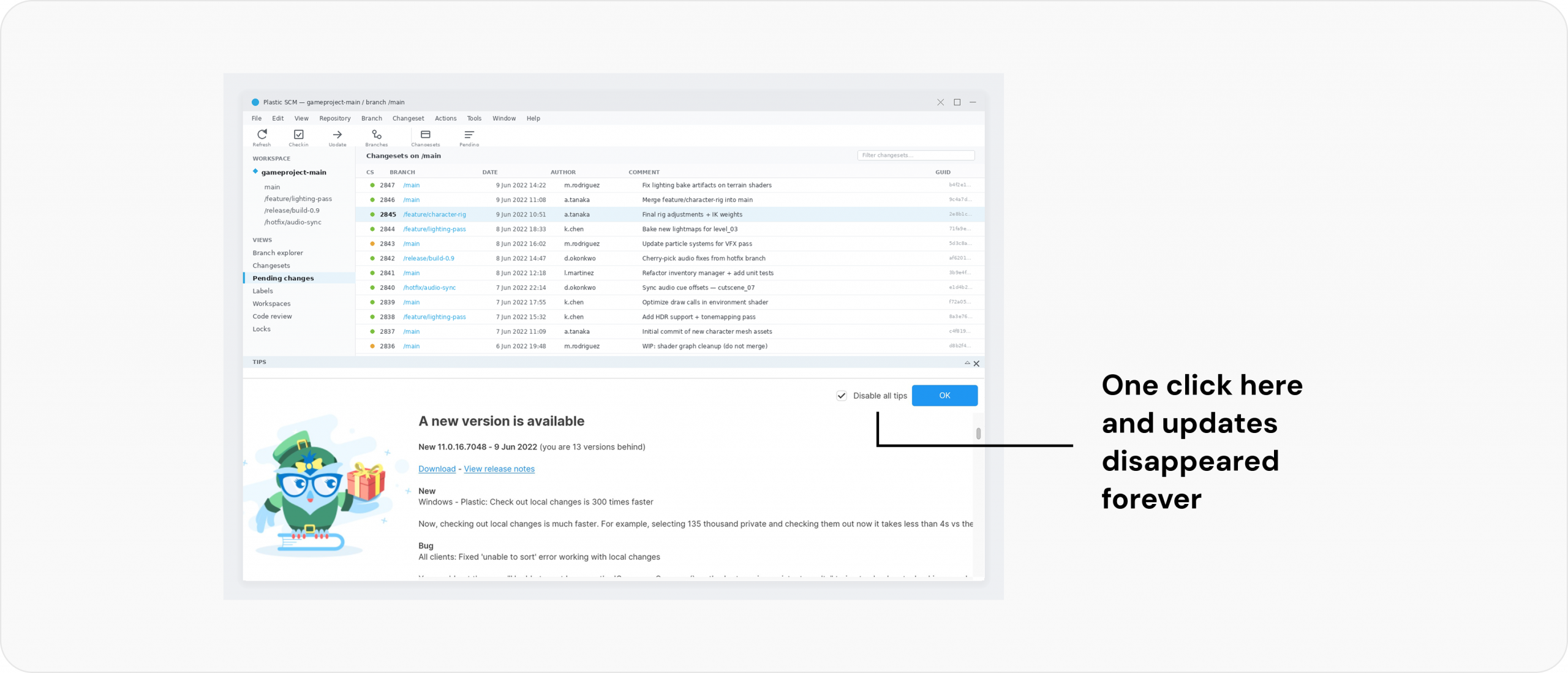
The team shipped new versions almost every week. But users rarely saw them. Update prompts lived in a separate "Tips" window. One click on "Disable all tips" and every future notification was gone. Most users had disabled it.
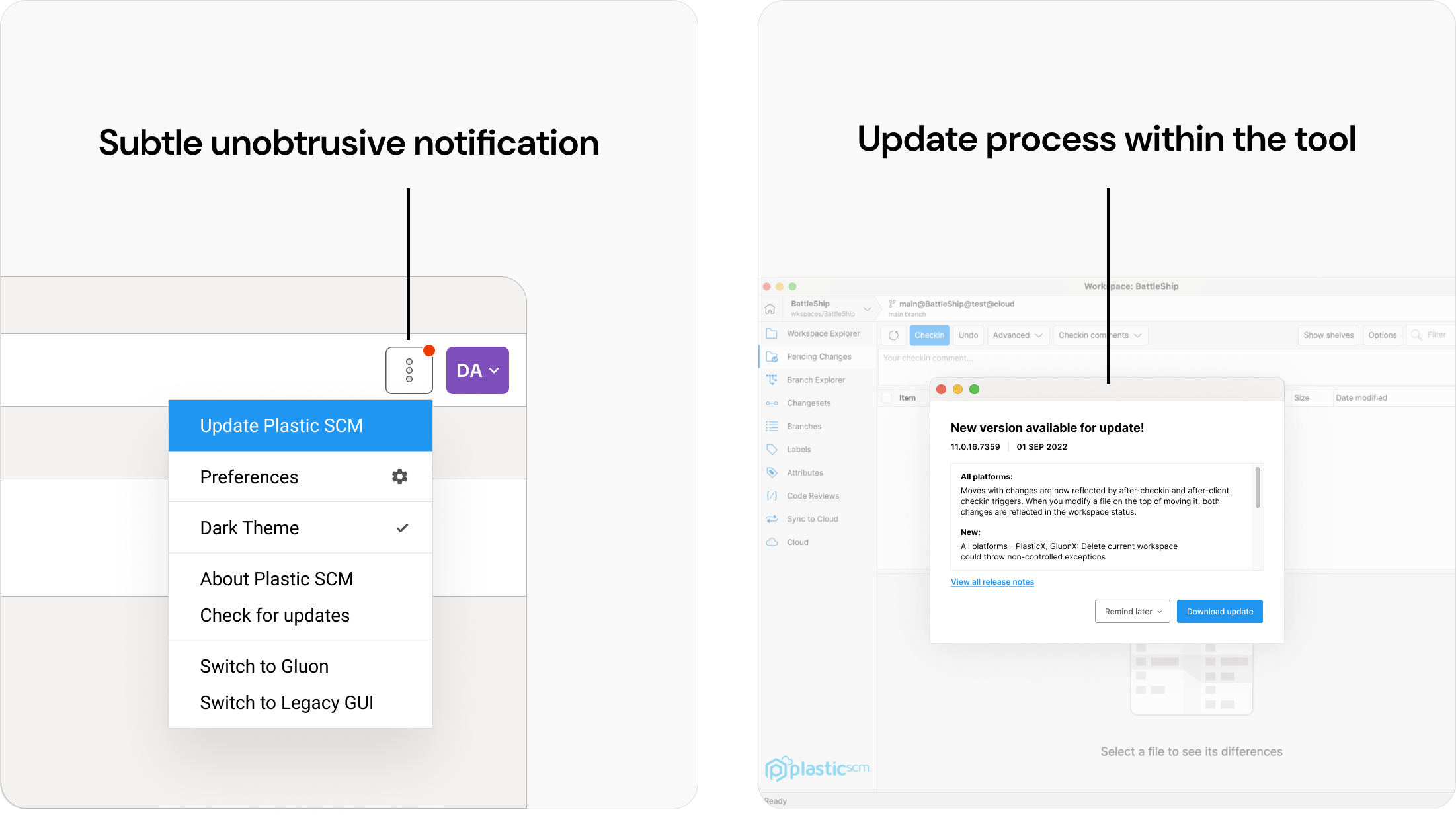
As the initial change I championed to fix this process. We launched the feature to update to new version within the tool. This resulted in 22% uptake in new version download in the first week of launch and set the foundation for all future changes.
Before
After
Making context switching effortless
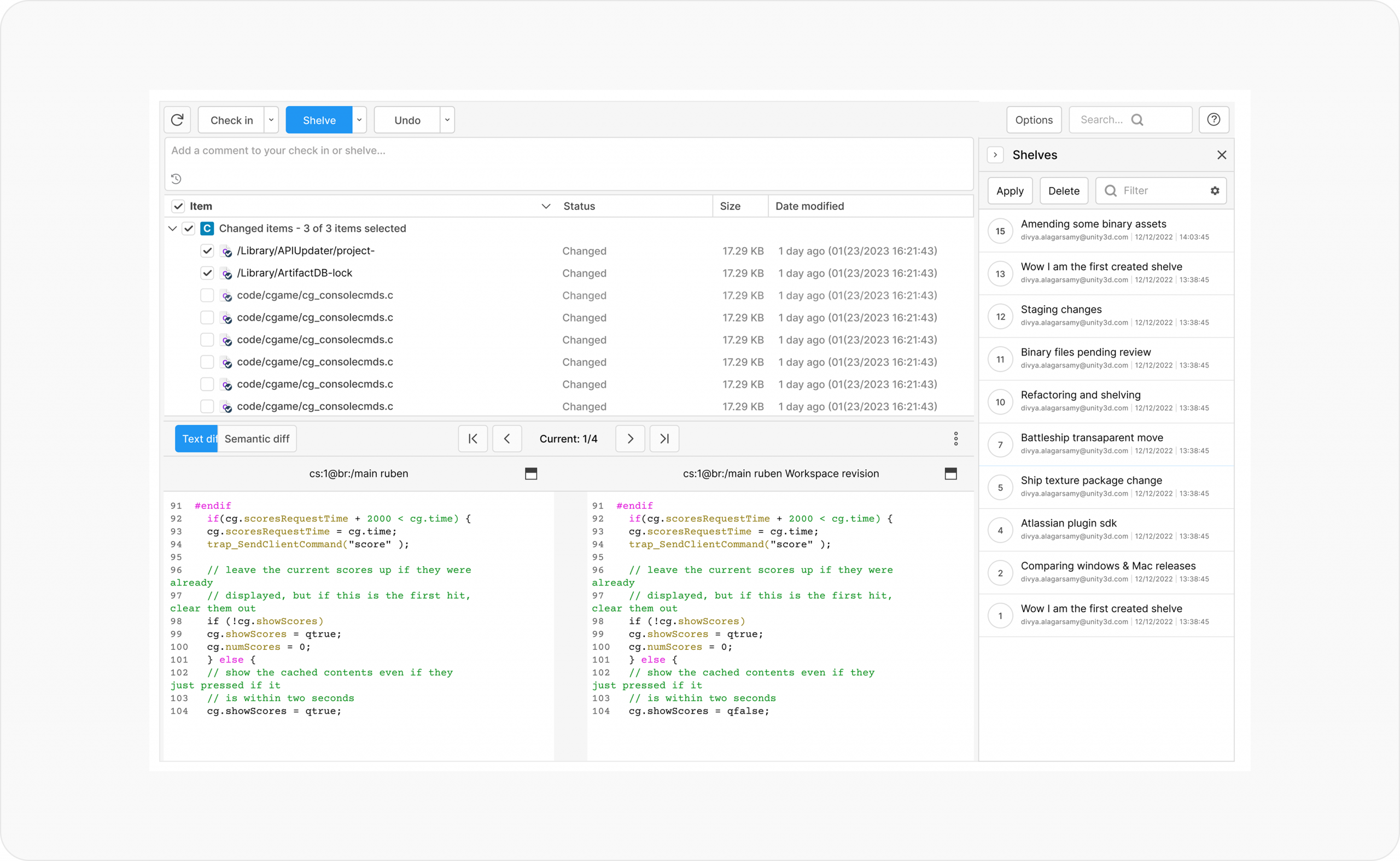
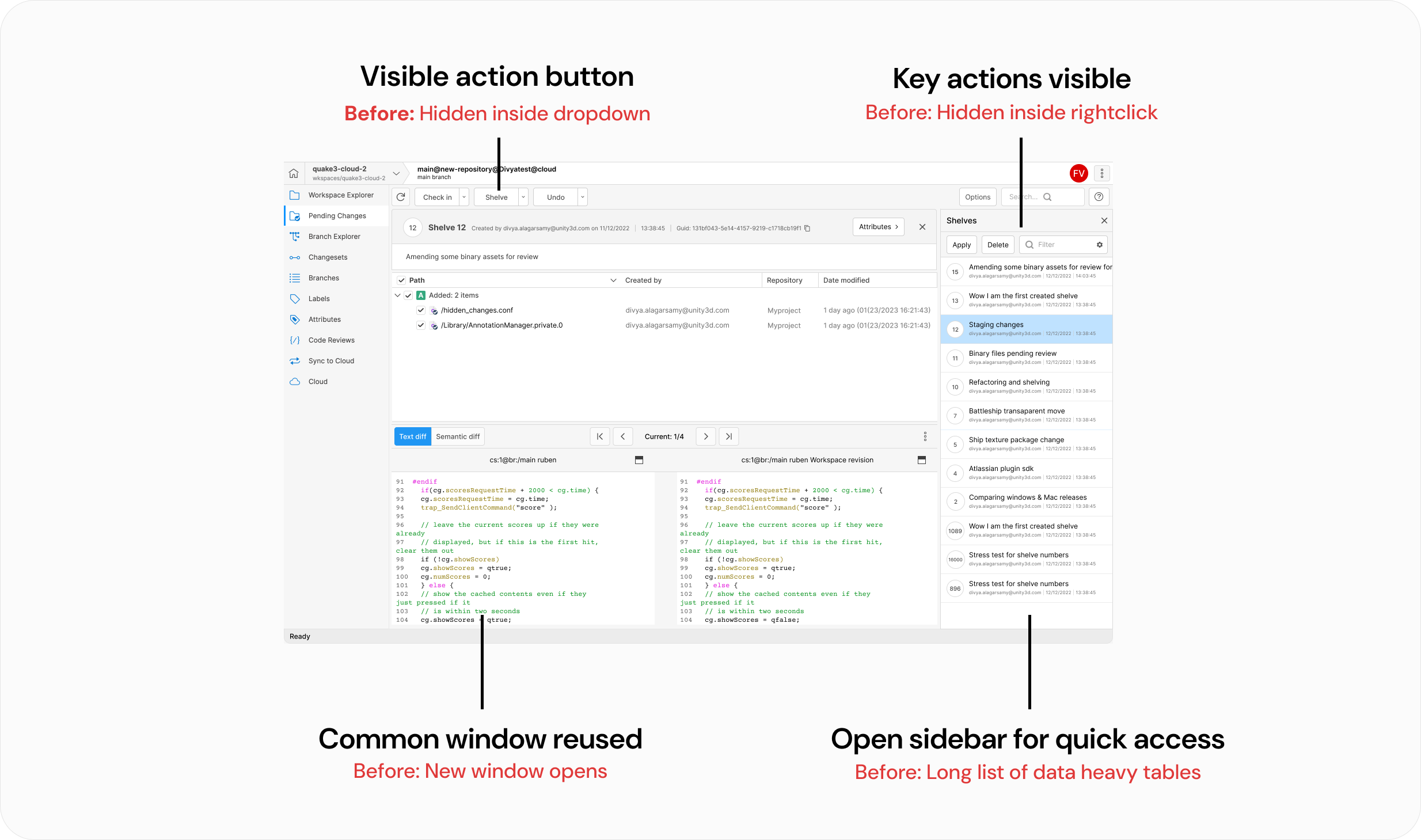
Game development is rarely linear. A developer mid-task gets pulled into many tasks so switching context is the job. The tool had a feature for this called shelving, that let developers set work aside, context switch and come back later.
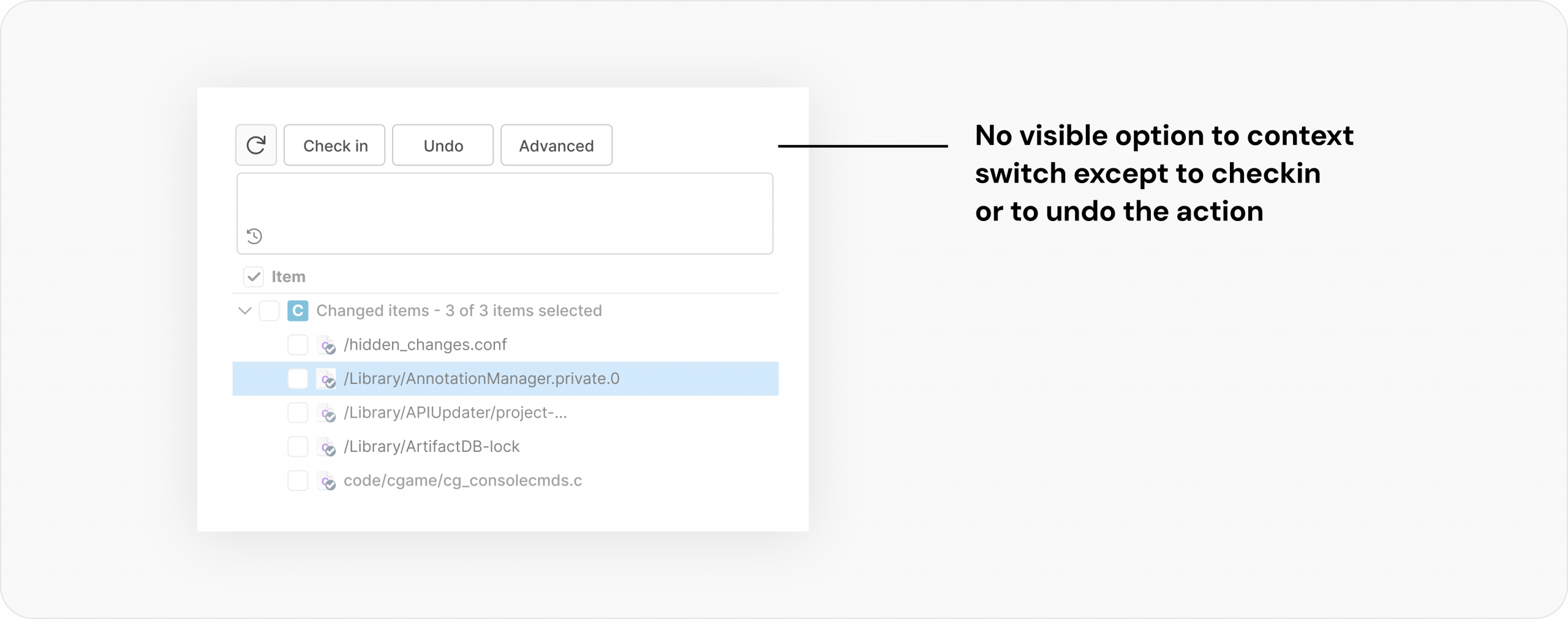
But this feature was buried. The ones who did use it faced a multi-step flow scattered across the tool. So they committed half finished work or avoided context switching altogether.
Before - No shelve feature visible
After
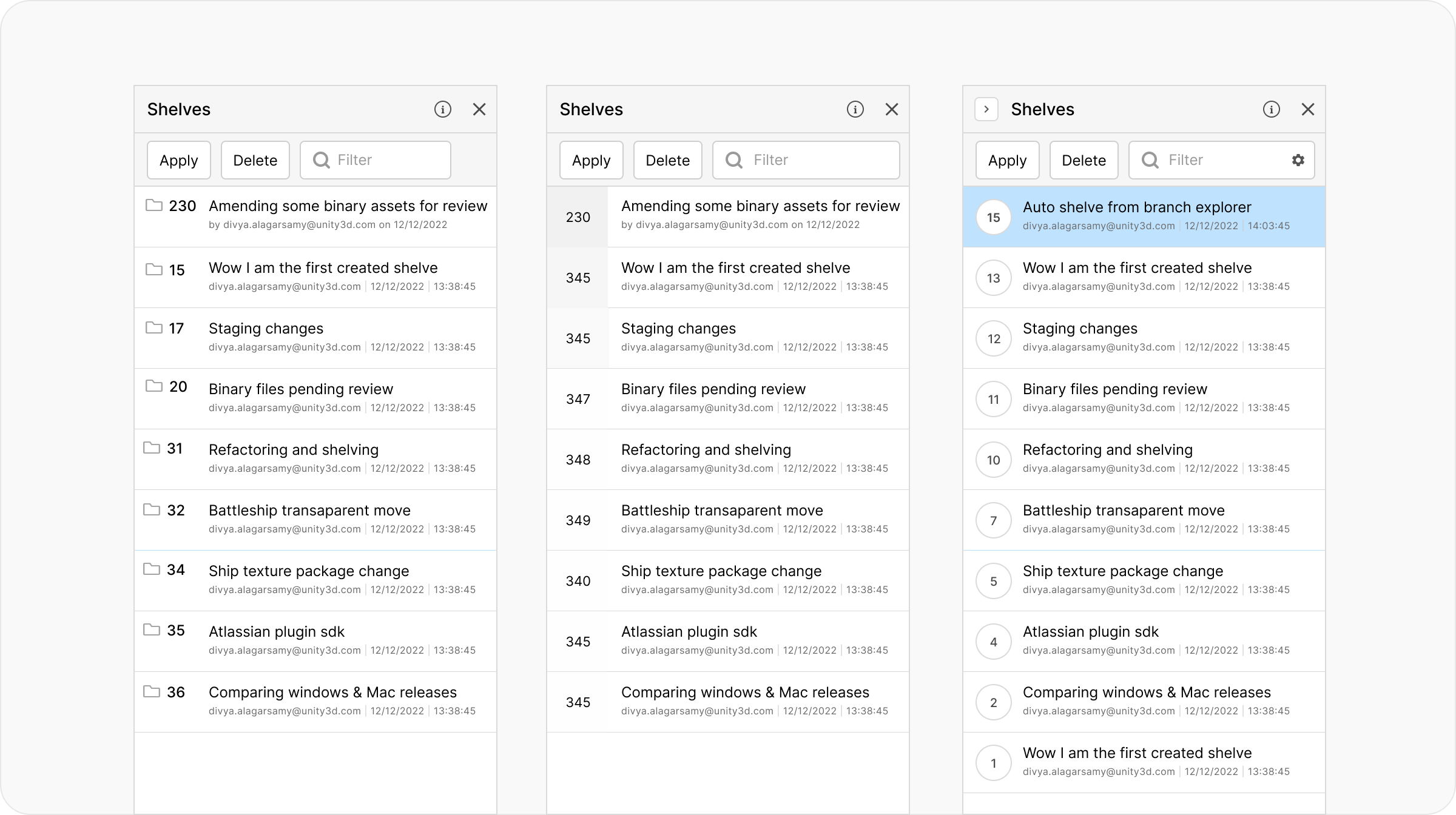
Some iterations explored
✧ Highlights
● Built a strong partnership with Product management to influence and move the team from reactive feature delivery to an outcome based roadmap by ruthlessly prioritising data-backed, user critical problems.
● Collaborated with three engineering teams within the product division, cutting through technical complexity and translating conversations into actionable information to keep everyone aligned.
● Challenged long-standing assumptions and biases held by team members and advocated for high impact UX changes that pulled the team closer to business goals
Next case study